Capturing the Unseen: The Future of Specialist Camera Technology in Sports Broadcasting
The demand for specialist cameras in the broadcast sector remains robust despite current commercial pressures across the industry. Production companies are actively seeking solutions that are of a higher quality, more efficient in operation, faster to rig, and more sustainable, all at a cost-effective price point. This trend is driving continuous innovation in camera formats, physical size, power efficiency, frame rates, and low light capabilities.
Innovation Focused on Immersion and Efficiency
The current landscape for new specialist camera development is defined by two key drivers: delivering unique, immersive perspectives for the viewer and improving production efficiency for the broadcaster.
The annual global sporting calendar significantly influences these investment cycles, with major upcoming events over the next few years already shaping technology roadmaps and new product development strategies.
The strongest present demand centres on systems that can either enhance existing camera positions or unlock entirely new angles. This includes:
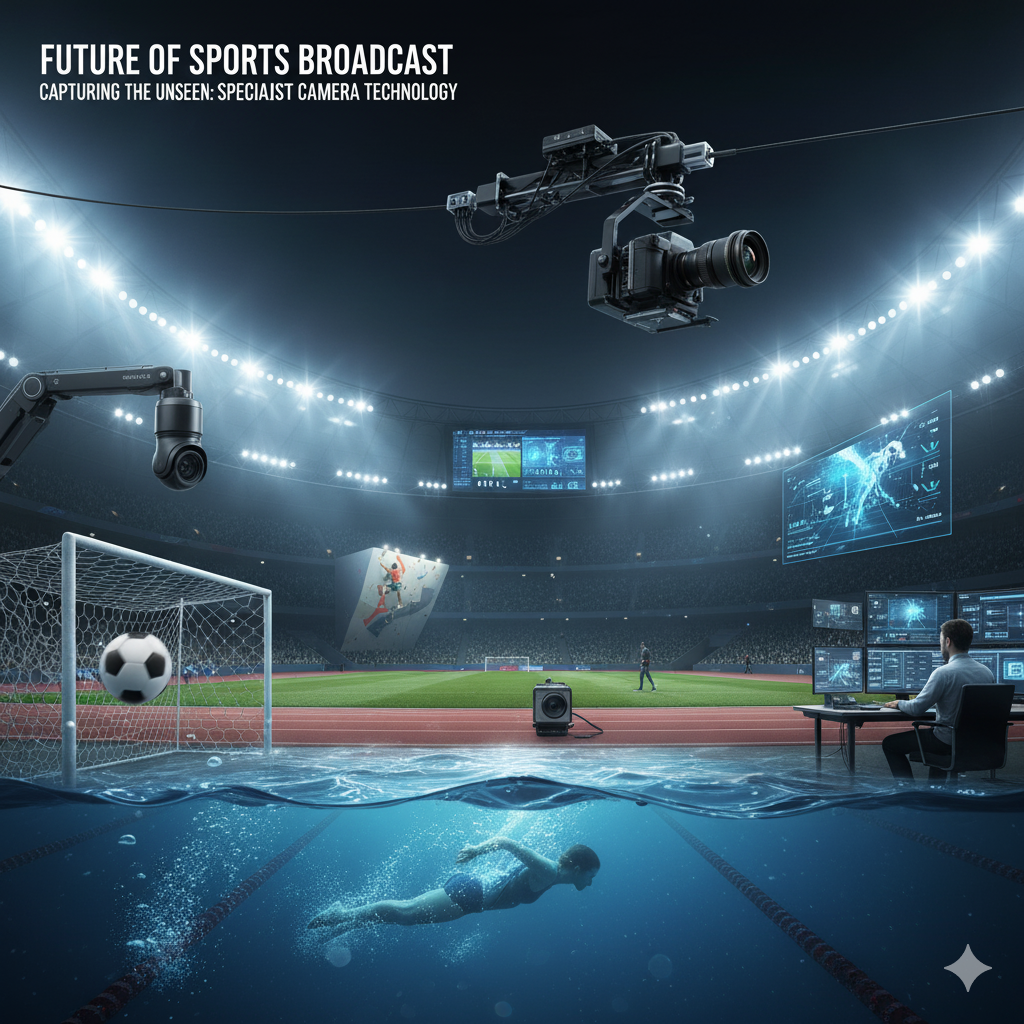
- Compact PTZ Cameras: These fully enclosed, easy to rig, and versatile cameras are consistently in high demand. Managing the supply and lifecycle of these cameras, particularly during peak sporting periods, is a constant operational focus for suppliers.
- Weatherproof and Submersible Systems: Essential for coverage in challenging environments, particularly aquatics. Recent upgrades include our entire suite of underwater tracking and PTZ cameras transitioning to 4K resolution, which enhances visibility for professional swimming events.
- High Frame Rate Mini Cameras: These are crucial for field of play immersive shots, such as goal net cameras, and are integral to refereeing and video review systems like VAR. As the technology becomes smaller and more functional, these systems are becoming more commercially viable for widespread deployment.
In addition to ready-made products, custom solutions continue to play a crucial role. For example, the development of a camera embedded in a wall handhold for Speed Climbing highlights the need to engineer solutions that are perfectly tailored to a specific sport’s requirements and budget. The broader trajectory is towards lighter, smaller, and more accessible technology, enabling new dynamic angles and richer live sports production.
Customer Priorities and The Role of AI
For new specialist camera investments, customers consistently prioritize practical elements that deliver immediate production value. The key factors include:
- Unique Perspectives: The ability to provide shots beyond standard broadcast angles is highly valued for enhancing viewer engagement.
- Seamless Integration: Cameras must easily integrate with existing control surfaces and OB truck software to avoid requiring operators to learn new applications. We actively collaborate with leading manufacturers to ensure our control surfaces can operate a wide array of cameras and robotic heads.
- Operational Efficiency: Quick setup and affordability are critical, especially when reducing rigging complexity for large scale productions.
Emerging technological trends promise to further boost both capability and efficiency. AI driven automation is a key trend, with applications in player tracking, facial recognition, and auto adjusting camera settings like focus, iris, contrast, and depth of field. Separately, the shift to 8K resolution in some systems allows for greater flexibility in enhanced cropping and re framing during production.
Immersive camera systems are central to modern sports broadcasting because they connect audiences more closely to the action. Goal net cameras, for example, provide a dynamic close up of scoring moments, typically used for replays. Similarly, 4K submersible cameras capture the power and technique of athletes from a completely unique underwater view. Aerial, cable, and tracking camera systems also offer dynamic, real-time views of plays unfolding at various heights and levels.
Finally, while the long-term objective of integrating broadcast, officiating, and augmented reality systems into a single content capture and analysis workflow remains on the horizon, current commercial and rights realities make this a complex undertaking today.
Products to Watch
Several recent product launches and upgrades underscore the direction of the market:
- New 4K Aquatics Cameras: Designed specifically for high-definition underwater sports coverage.
- Next Generation Remote Heads and PTZ Systems: These robotic nodal systems expand automation capabilities and precision control for various applications.
- New Specialist Mini Cams: Developed to meet the needs of both traditional broadcast and the growing use of content for emerging social media platforms and sponsors. Sponsor backed camera positions, an increasingly popular model following successful applications in the US, could provide a new avenue to mitigate commercial pressures in the wider sports broadcasting market.
- HDR Adaptation: As High Dynamic Range becomes an industry standard, even mini specialist cameras are being upgraded to meet the technical requirements for this new display format.
For more information about Camera Corps, please contact us at https://cameracorps.co.uk/contact/.